Parallel Verses
New American Standard Bible
King James Version
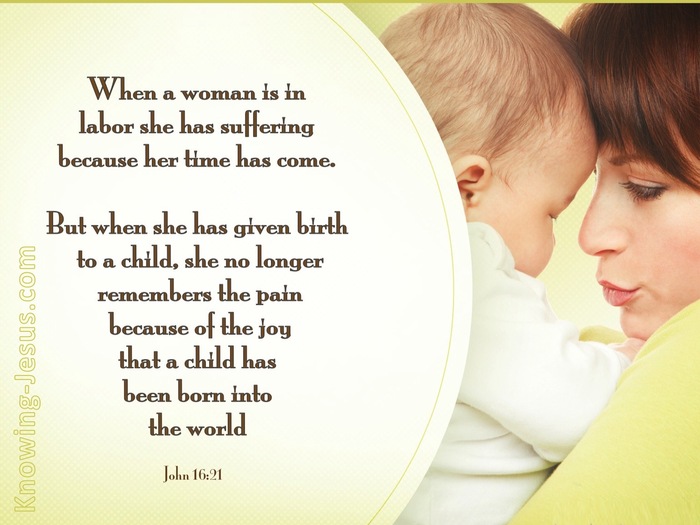
A woman when she is in travail hath sorrow, because her hour is come: but as soon as she is delivered of the child, she remembereth no more the anguish, for joy that a man is born into the world.
Holman Bible
International Standard Version
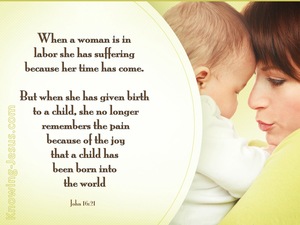
When a woman is in labor she has pain, because her time has come. Yet when she has given birth to her child, she doesn't remember the agony anymore because of the joy of having brought a human being into the world.
A Conservative Version
When a woman brings forth she has pain because her hour has come. But when she has given birth to the child she no longer remembers the anguish because of the joy that a man was born into the world.
American Standard Version
A woman when she is in travail hath sorrow, because her hour is come: but when she is delivered of the child, she remembereth no more the anguish, for the joy that a man is born into the world.
Amplified
An Understandable Version
A woman has pain when giving birth because her time has come. But when the child is born, she does not remember the intense suffering because she is so happy over the child being born into the world.
Anderson New Testament
A woman, when she is in labor, has sorrow, be cause her hour has come; but when the child is born, she no longer remembers the pain, for joy that a man is born into the world.
Bible in Basic English
When a woman is about to give birth she has sorrow, because her hour is come; but when she has given birth to the child, the pain is put out of her mind by the joy that a man has come into the world.
Common New Testament
When a woman is in labor she has sorrow, because her hour has come; but as soon as she gives birth to the child, she no longer remembers the anguish, for joy that a child has been born into the world.
Daniel Mace New Testament
a woman when she is in travail, is afflicted at the approach of her pains: but as soon as she is delivered of the child, the remembrance of her anguish, is lost in her joy, that a man is born into the world.
Darby Translation
A woman, when she gives birth to a child, has grief because her hour has come; but when the child is born, she no longer remembers the trouble, on account of the joy that a man has been born into the world.
Godbey New Testament
When a woman may bring forth she has sorrow, because her hour has come: but when the little child may be born, she remembers her suffering no more, for the joy that a man has been born into the world.
Goodspeed New Testament
When a woman is in labor she is sorrowful, for her time has come; but when the child is born, she forgets her pain in her joy that a human being has been brought into the world.
John Wesley New Testament
A woman when she is in travel, hath sorrow, because her hour is come; but when she is delivered of the child, she no longer remembreth the anguish, for joy that a man is born into the world.
Julia Smith Translation
A woman when she should bring forth, has grief, because her hour has come: and when the child should be born, she no more remembers the anguish, for the joy that a man was born into the world.
King James 2000
A woman when she is in travail has sorrow, because her hour has come: but as soon as she is delivered of the child, she remembers no more the anguish, for joy that a man is born into the world.
Lexham Expanded Bible
A woman, when she gives birth, experiences pain because her hour has come. But when [her] child is born, she no longer remembers the affliction, on account of the joy that a human being has been born into the world.
Modern King James verseion
The woman has grief when she bears, because her hour has come. But when she brings forth the child, she no longer remembers the anguish, because of the joy that a man is born into the world.
Modern Spelling Tyndale-Coverdale
A woman when she travaileth hath sorrow, because her hour is come: but as soon as she is delivered of the child she remembereth no more the anguish, for joy that a man is born into the world.
Moffatt New Testament
When a woman is in labour she is sorry, for her time has come; but when the child is born she remembers her anguish no longer, for joy that a human being has been born into the world:
Montgomery New Testament
A woman in labor has grief because her hour is come; but when she has given birth to the babe she no longer remembers her anguish, because of joy that a child has been born into the world.
NET Bible
When a woman gives birth, she has distress because her time has come, but when her child is born, she no longer remembers the suffering because of her joy that a human being has been born into the world.
New Heart English Bible
A woman, when she gives birth, has pain, because her time has come. But when she has delivered the child, she does not remember the anguish any more, for the joy that a human being is born into the world.
Noyes New Testament
A woman when she is in travail hath sorrow, because her hour is come; but as soon as she is delivered of the child, she remembereth no more the anguish, through joy that a man is born into the world.
Sawyer New Testament
For when a woman is in labor she has pain, because her time has come; but when she has borne the child she no longer remembers the distress, because of joy that a man is born into the world.
The Emphasized Bible
A woman, as soon as she is about to bring forth, hath, grief, because her hour hath come; but, as soon as she hath given birth to the child, no longer, remembereth she the anguish, by reason of the joy, that a human being into the world hath been born.
Thomas Haweis New Testament
A woman when she is in travail hath sorrow, because her hour is come: but when the little son is born, she no more remembers the anguish, for joy that a man is brought into the world.
Twentieth Century New Testament
A woman in labor is in pain because her time has come; but no sooner is the child born, than she forgets her trouble in her joy that a man has been born into the world.
Webster
A woman when she is in travail hath sorrow, because her hour is come: but as soon as she is delivered of the child, she remembereth no more the anguish, for joy that a man is born into the world.
Weymouth New Testament
A woman, when she is in labour, has sorrow, because her time has come. But when she has given birth to the babe, she no longer remembers the pain, because of her joy at a child being born into the world.
Williams New Testament
When a woman is in labor, she is in pain, for her time has come, but when the baby is born, she forgets her pain because of her joy that a human being has been born into the world.
World English Bible
A woman, when she gives birth, has sorrow, because her time has come. But when she has delivered the child, she doesn't remember the anguish any more, for the joy that a human being is born into the world.
Worrell New Testament
A woman, when she is in travail, has sorrow, because her hour came; but, when she bears the child, she no longer remembers the anguish, because of the joy that a man was born into the world.
Worsley New Testament
A woman when she is in labor, hath sorrow, because her hour is come; but when she is delivered of the child, she thinks no more of the anguish, for joy, that a man is born into the world.
Youngs Literal Translation
'The woman, when she may bear, hath sorrow, because her hour did come, and when she may bear the child, no more doth she remember the anguish, because of the joy that a man was born to the world.
Themes
Coming of the lord jesus Christ » The lord going away only to return later
Love » The reward for loving the lord
Topics
Interlinear
Tikto
De
Gennao
Dia
Devotionals
Devotionals about John 16:21
Devotionals containing John 16:21
References
Easton
Hastings
Word Count of 37 Translations in John 16:21
Images John 16:21
Prayers for John 16:21
Verse Info
Context Readings
Jesus Predicts His Return To The Disciples
20
Truly I tell you, you will weep and lament, but the world will rejoice. You will be sorrowful, but your sorrow will be turned into joy.
21
Cross References
Jeremiah 30:6-7
Ask now and see: Can a man give birth to a child? Why, then, do I see every strong man holding his stomach in pain like a woman giving birth to a child? Why has every face turned pale?
1 Thessalonians 5:3
When they say, Peace and security! then sudden destruction will come upon them, as labor pains come to a pregnant woman. They will not escape.
Genesis 3:16
He said to the woman: I will greatly increase your pains in childbirth; with pain you will give birth to children. Your desire will be for your husband, and he will rule over you.
Genesis 21:6-7
Sarah said: God brought me laughter. Everyone who hears about this will laugh on account of me.
Genesis 30:23-24
So she conceived and gave birth to a son. She said: God has taken away my reproach.
1 Samuel 1:26-27
Hannah said to him: My lord. Do you remember me? I am the woman you saw standing here, praying to Jehovah.
Psalm 113:9
He makes a childless woman a joyful mother. Praise Jehovah!
Isaiah 13:8
They will be terrified! Pains and anguish will possess them. They will writhe like a woman in labor. They will look at one another in amazement with their faces reddened with excitement (aflame).
Isaiah 26:16-18
Jehovah, they came to you in their distress. When you disciplined them, they could barely whisper a prayer.
Hosea 13:13-14
They have the opportunity to live again, but they are not smart enough to take it. They are like a baby who is about to be born but will not come out of its mother's womb.
Micah 4:10
Be in pain, and labor to bring forth, O daughter of Zion, like a woman in childbirth! For now you will go out of the city and dwell in the field. You will go to Babylon where you will be rescued. Jehovah will redeem you from the hand of your enemies.
Luke 1:57-58
Now it was time for Elisabeth to give birth. She gave birth to a son.
Galatians 4:27
It is written, Rejoice, barren woman who does not give birth. Break forth and cry, you who do not labor; for there are more children of the desolate than of the one who has the husband.
Revelation 12:2-5
She, being with child, cried out in labor pains, ready to deliver.